The question behind the comparison
If your file has a flag, apply first to the building type whose published rules fit your file best. For most flagged files that means a highrise when income is strong and the flag is old, and a midrise or garden community when it isn’t.
Here’s how the fees, income rules, and conditional approvals line up. This highrise vs midrise apartment screening guide uses DFW communities’ own published fee sheets, checked November 2026.
It sits under the luxury and highrise page, which covers Class A strategy in full. Below, we compare the three building types and show where each one is easier to get into.
Building types in DFW
Highrises, midrises, and garden communities differ in size, location, and management style. Those differences shape how each one screens.
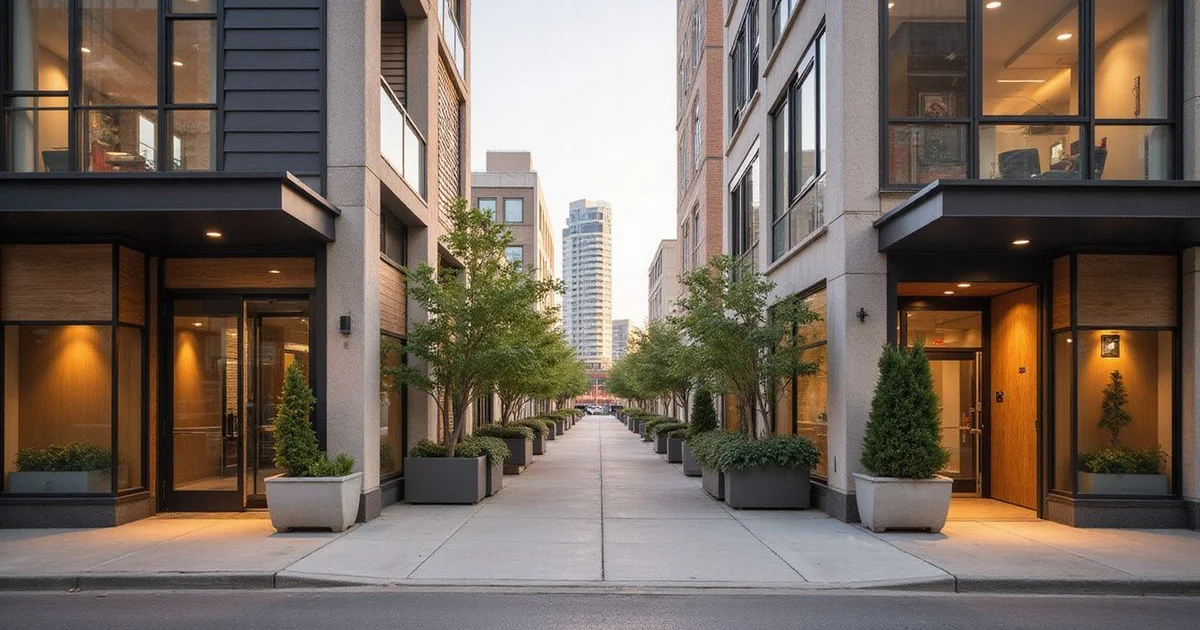
- Highrise: towers in Uptown, Downtown Dallas, Victory Park, the Harwood District, and Turtle Creek. Concierge, structured parking, and professional management.
- Midrise: four to eight stories, common in Las Colinas, Legacy West, Frisco, Fort Worth’s West 7th, and near DART and A-train stations.
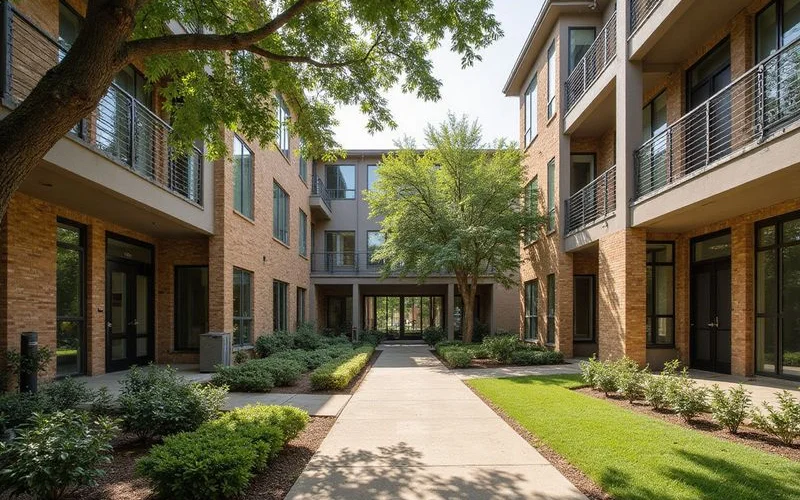
- Garden: two- and three-story buildings around courtyards, spread across every DFW suburb.
The comparison, from published sheets
Highrises charge the most and apply the most fixed criteria, while garden communities charge the least and vary the most. This table shows the numbers side by side, including the Class A vs Class B gap in fees and income rules.
| Factor | Highrise (Class A core) | Midrise | Garden (suburban example) |
|---|---|---|---|
| Application fee | $50 to $85 per adult | Within the $50 to $85 DFW range | $65 at Town Creek, Coppell |
| Admin fee | $150 to $350 | Within the $125 to $350 DFW range | $125 at Town Creek |
| Deposit | $350 at SkyHouse Dallas; $500 / $750 / $1,000 by unit at One Uptown; Brady by approved credit | Set by unit or by screening result | $150 / $250 at Town Creek |
| Income multiple | 3x common; 3.5x at One Uptown | 3x common | 3x common |
| Conditional approval | Added deposit or guarantor program at partner towers | Strata publishes an additional deposit with conditional approval | Varies by community |
| Screening | Automated model, fixed criteria | Automated model at professionally managed buildings | Automated or manual, by owner |
What the table means for a flagged file
Three things matter most for a flagged file: what a denial costs you, how fixed the criteria are, and how high the income bar sits.
Fees
A denied application costs less at the lower fee level, so a borderline file is cheaper to test there. One highrise application at $85 plus a $350 admin fee puts $435 at stake. The suburban example puts $190 at stake.
| Highrise | Suburban example | |
|---|---|---|
| One application | $435 | $190 |
| Three denials | $1,305 | $570 |
Criteria
Highrises publish fixed criteria and apply them without exceptions at the leasing desk. That makes them predictable: once we read the criteria, the result is known.
Garden communities vary more. That widens the range of files some of them accept.
Income
The 3.5x rule shows up at towers. At $2,400 rent, 3.5x needs $8,400 a month and 3x needs $7,200.
If you sit between those numbers, a 3x midrise fits where a 3.5x tower does not.
Which type to target first
Start with the type that matches your strongest point. Pick from the list below.
- Strong income, older flag, paid balance: start with highrises. The criteria are fixed and published, and an added deposit is the common condition.
- Income near the multiple, or a recent flag: start with midrises at 3x. More written criteria enter the comparison.
- Open balance or multiple flags: start with garden communities, where the spread of written policies is widest. Garden-style apartments are often where a second chance happens, and you can pay down the balance while you search.
- No flags: pick by commute and concessions. Every type is open.
Total cost, not just fees
The approval path adds to the base fees, and some of that money doesn’t come back. An added refundable deposit returns at move-out. A guarantor fee at one month’s rent, or a risk fee of $400 to $1,000 one time, does not.
Count those costs before you pick a building. The DFW move-in cost guide totals every path at both fee levels.
How we use this
We read the written criteria at each building type, compare them with your file, and recommend the type and the buildings to target first. You pay $0 for the search, and the building makes the final approval decision.
Send us your file and we’ll tell you where to apply first.